The short answer
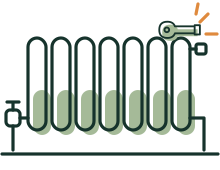
if a radiator is warm at the bottom and cold at the top, there's air trapped inside. Turn the heating off, let it cool, open the bleed valve with a radiator key until the hissing stops and water appears, then close it. It takes about ten minutes.
How to tell a radiator needs bleeding.
- It's hot at the bottom and cool or cold at the top.
- It gurgles or ticks when the heating comes on.
- It takes much longer to warm up than the others.
If it's cold at the bottom and warm at the top, that's a different problem. Skip to "When it's not the radiator".
What you'll need.
- A radiator key (a couple of pounds from any DIY shop). Some modern valves take a flat-head screwdriver.
- An old cloth or towel.
- A small tub or mug to catch drips.
Step by step.
- Turn the heating off and wait. Give it at least 30 minutes to cool. Bleeding a hot radiator can spray scalding water.
- Find the bleed valve. It's a small square pin inside a round fitting, at the top of the radiator on one end.
- Hold the cloth under the valve and fit the key.
- Turn the key anticlockwise, slowly. A quarter to half a turn is plenty. You'll hear a hiss as the air escapes.
- Close it as soon as water comes out. Turn the key clockwise until it's snug. Don't overtighten.
- Repeat on any other radiators that need it. Start downstairs and work up.
- Check the boiler pressure. Letting air out lowers the pressure in the system. If the gauge has dropped below 1 bar, top it up using the filling loop, following your boiler manual.
- Turn the heating back on and check the radiator warms evenly.
When it's not the radiator.
Bleeding sorts trapped air. It won't sort these:
- Cold at the bottom, warm at the top. That usually means sludge has settled inside. The radiator or the whole system needs flushing, which is a job for a heating engineer.
- One radiator stays cold all over. The valve may be stuck or closed. Check both valves are open. If a thermostatic valve has seized, it'll need freeing or replacing.
- Upstairs warm, downstairs cold (or the other way round). The system may need balancing, or the pump may be struggling.
- You're bleeding the same radiator every few weeks. Air is getting into the system somewhere, or the pressure keeps dropping. That's worth having looked at.
- Every radiator is cold. Look at the boiler and the thermostat first, not the radiators.
A quick word on safety.
Bleeding a radiator is a sensible job to do yourself. Anything involving the boiler's insides or the gas supply isn't. Only a Gas Safe registered engineer should work on a gas appliance.
When to call FixAble.
If bleeding doesn't sort it, or you'd rather not do it yourself, report it. Plumbing and heating repairs are part of every FixAble plan, with labour included and up to £250 of materials on every job. We book your appointment within 24 hours.
FixAble is a home maintenance subscription for homes in Greater Manchester. One team for every job, and your price is set before anything goes wrong.